
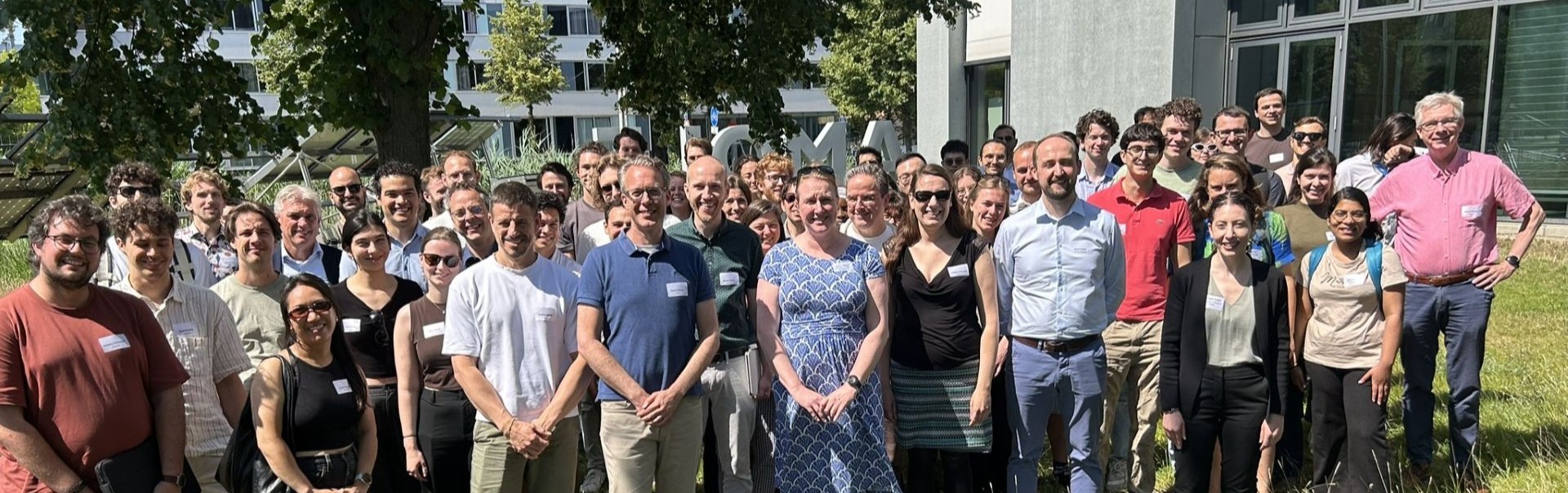
Sustainable Energy Materials research community meets at symposium
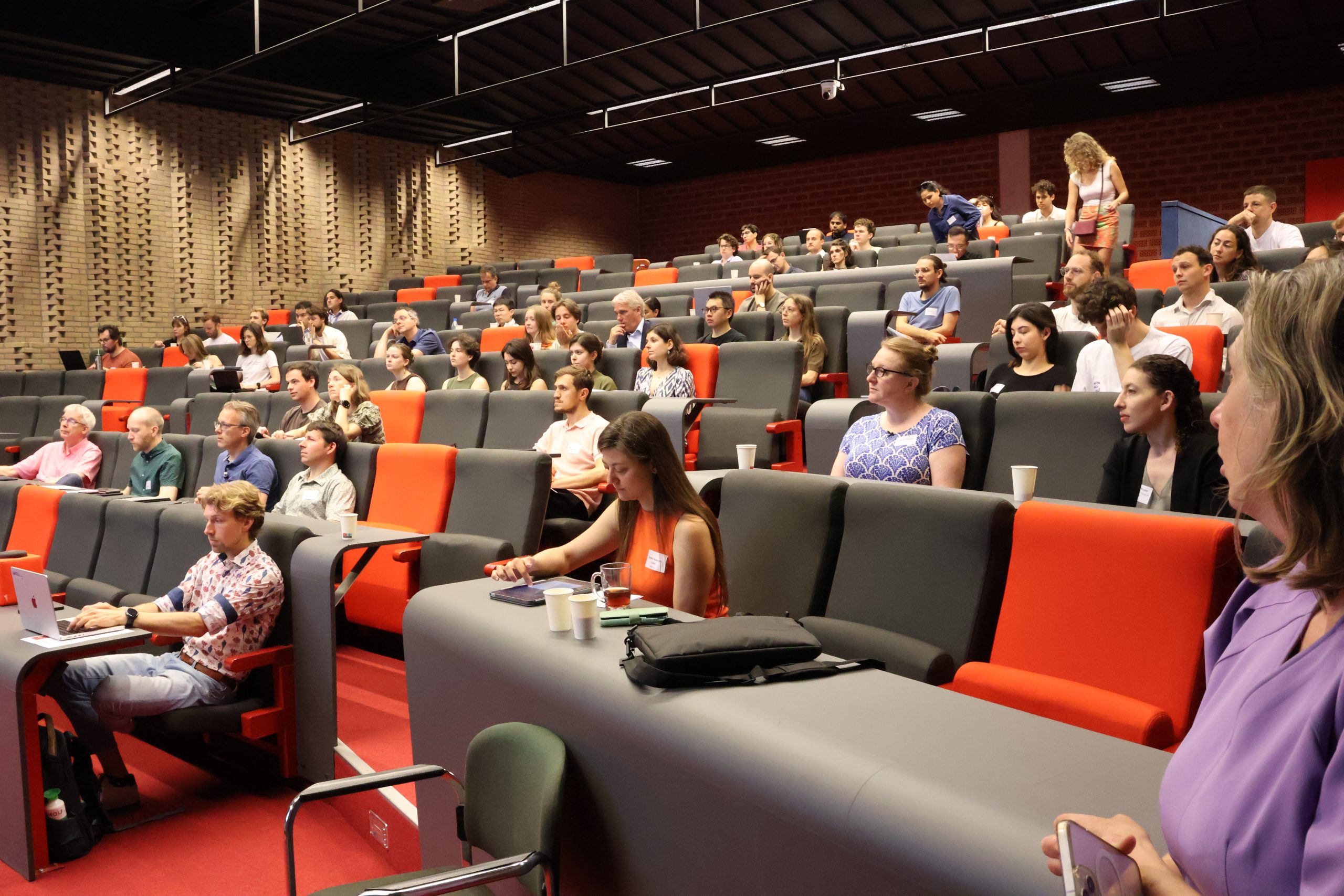
On June 19, physicists and chemists in the Netherlands came together to learn about recent discoveries on light for driving and monitoring chemical reactions. Light is a powerful and sustainable tool for steering such reactions with precision. AMOLF organized the bi-annual symposium at Amsterdam Science Park.
Stabilized nanoparticles
One of the speakers at the symposium was Professor Peter Zijlstra (Eindhoven University of Technology) with his talk on ‘Monitoring plasmon-enhanced processes at the single-molecule level’. Part of Zijlstra’s work explores how light can be used to control which molecules are attached to gold nanoparticles, and where. Strikingly, his group has shown that green light removes stabilizing molecules much more efficiently from the tips of gold nanorods than from their sides. Being able to target just the tips is a valuable degree of control: it means researchers can decide precisely where on a single particle to attach a molecule, using nothing but light.
Metal nanoparticles are of great interest, for example because they can be used to catalyze chemical reactions, build sensors, and more, and for many of these uses it matters exactly where a molecule sits on the particle. Zijlstra demonstrated this by using green light to strip DNA molecules from gold nanorods and then attaching entirely new ones, all without added chemicals. It is a neat illustration of how even a well-studied material like gold can still offer new ways to be controlled and put to use.
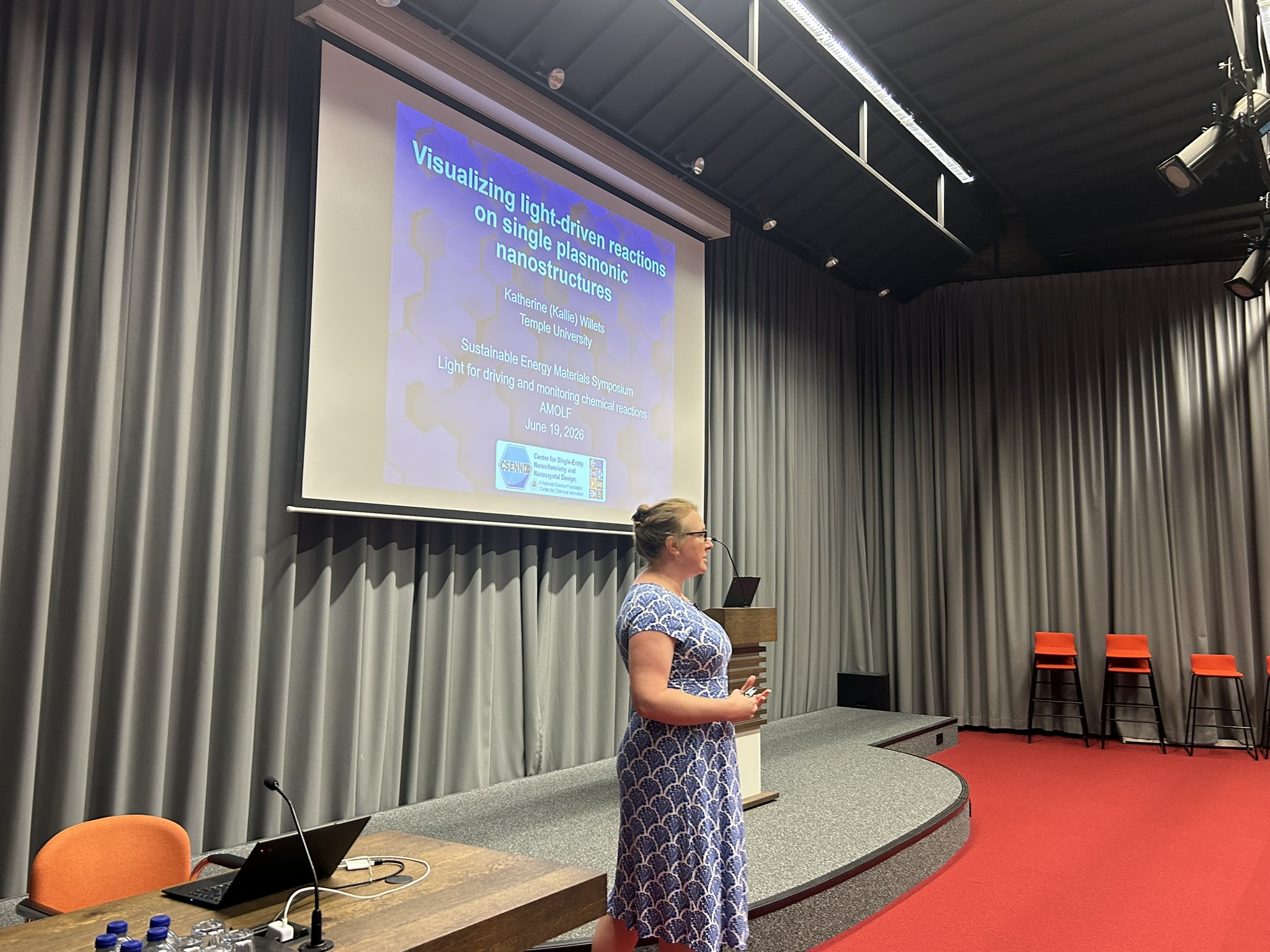
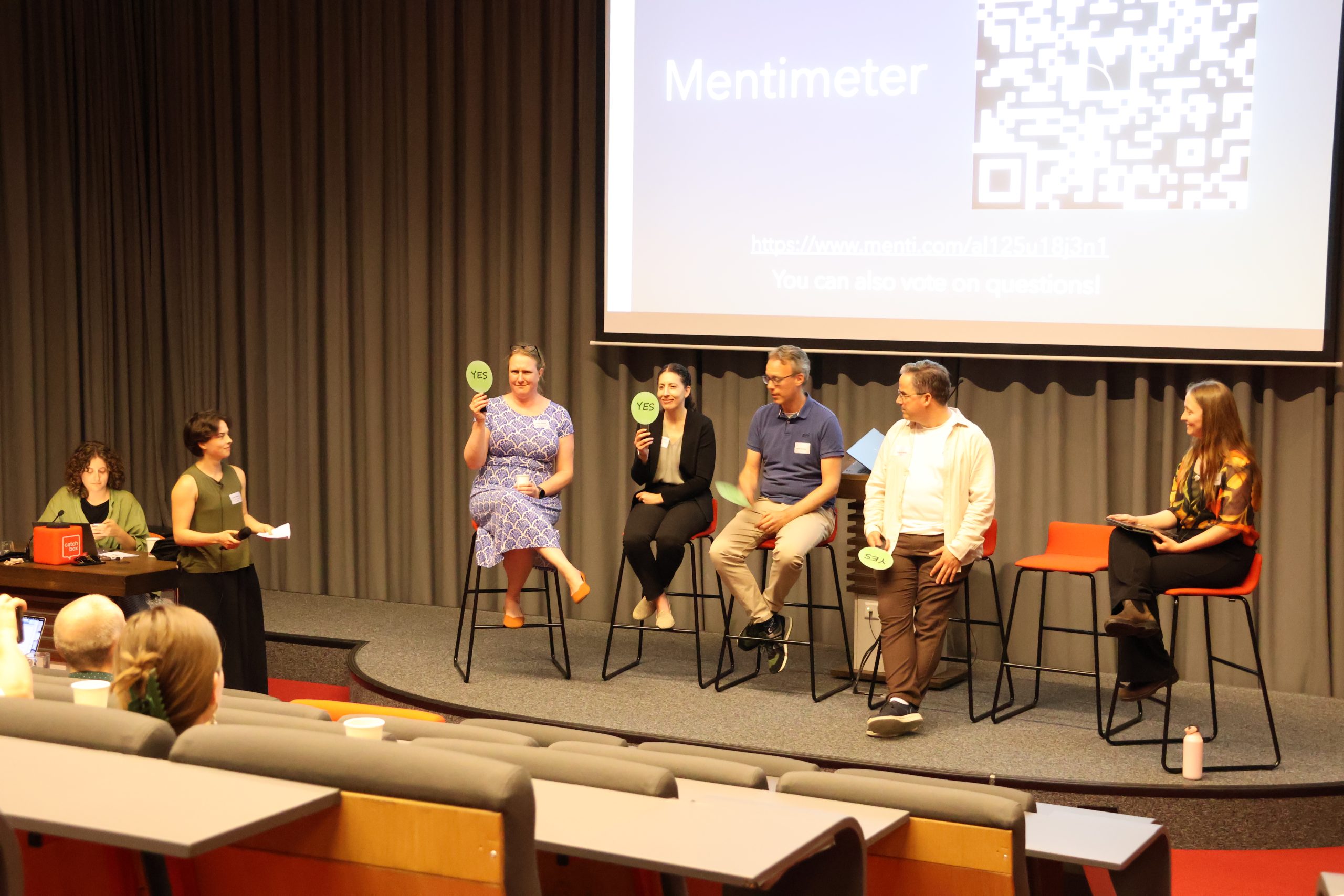
The symposium concluded with a student-led panel discussion with the 4 keynote speakers: Professor Kallie Willets (Temple University, Philadelphia, US), Professor Peter Zijlstra (Eindhoven University of Technology), Dr. Andrea Pickel (University of Texas at Austin, US), Professor Pascal Buskens (TNO).
Gallery
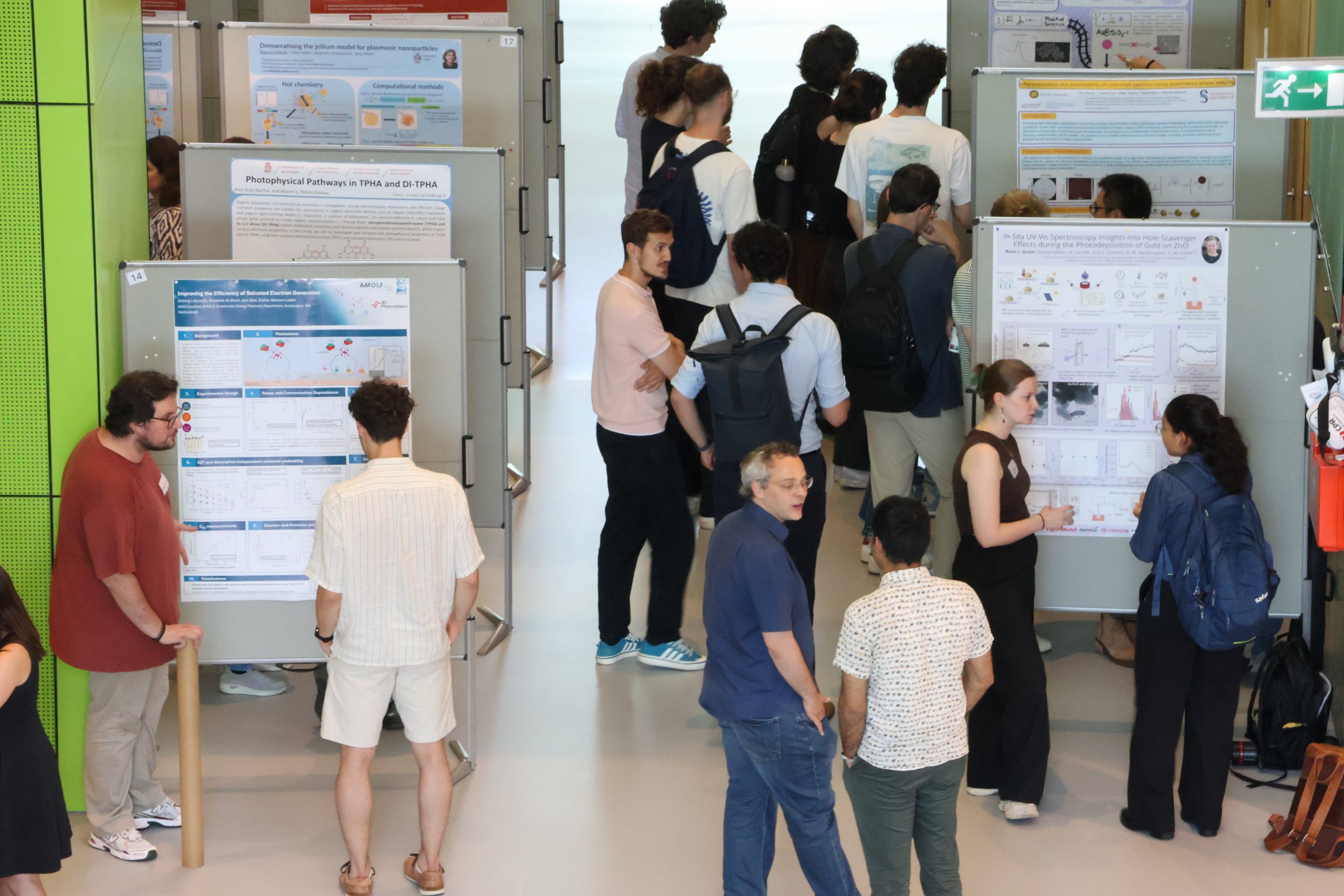
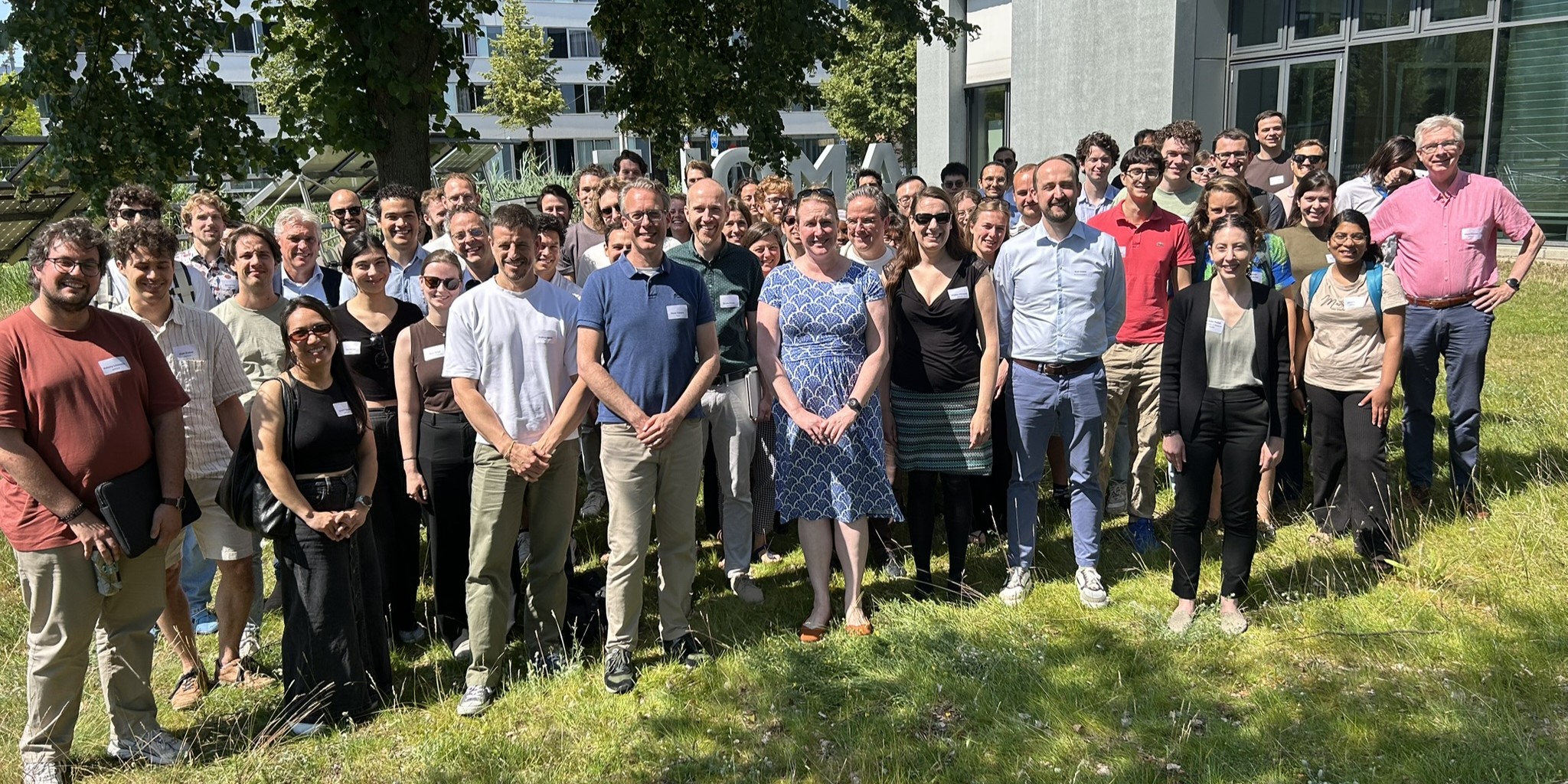
Click on an image to open it in a new tab
Learn more
If you want to read more about Sustainable Energy Materials research at AMOLF, then have a look at the Sustainable Energy Materials page.
