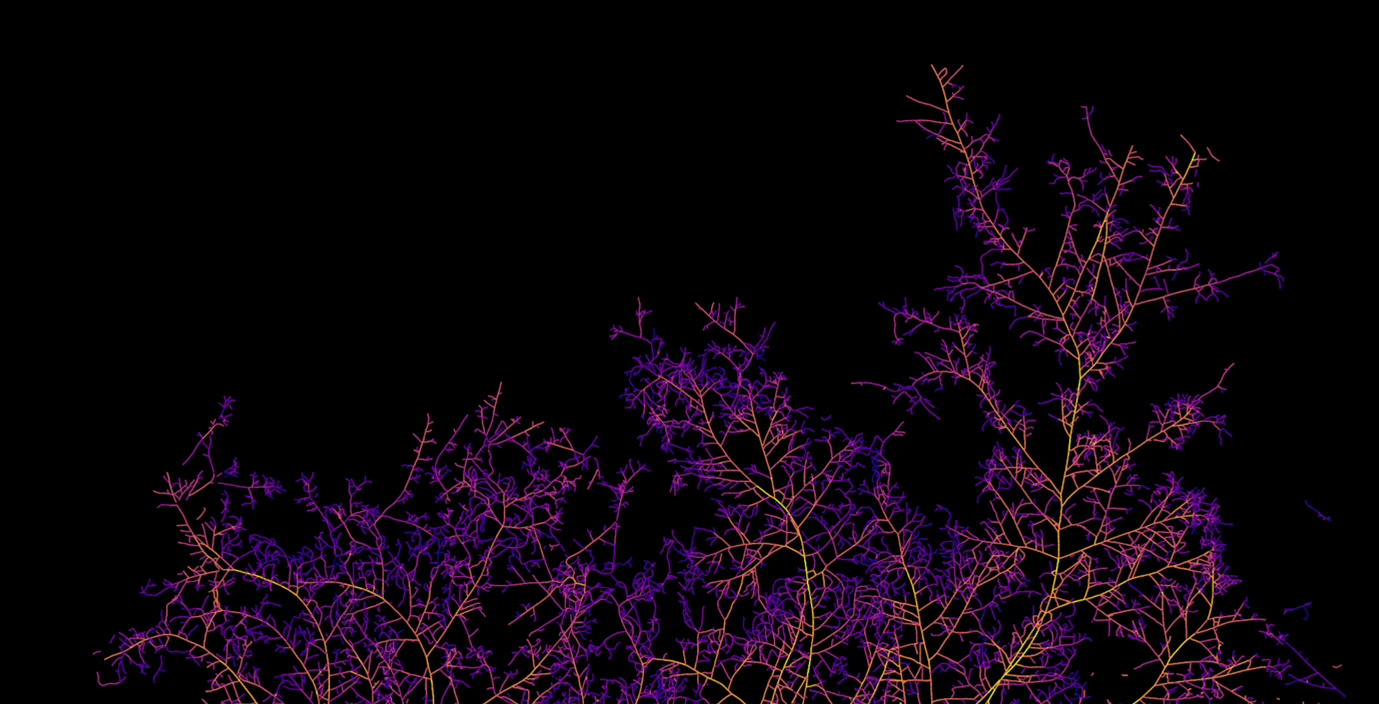
Arbuscular mycorrhizal fungi form symbiotic trade relationships with around 70% of plant species on earth. The fungi provide nutrients and water in exchange for carbon produced by plants. As ecosystem engineers, these networks form a critical living infrastructure that draws carbon into soils and supports much of life on earth. Last year, the research team published global analyses of the diversity patterns of underground fungal communities, to help decision-makers locate predicted underground biodiversity hotspots. But until now, no-one has attempted to predict and visualize the physical density and global distribution of the plant-fungal networks.
Combining field work and robotic imaging
The research team, led by Dr. Justin Stewart and Professor Toby Kiers (VU/SPUN), assembled data on the density of fungal networks from over 16.000 soil-cores collected across earth. They developed machine-learning models that incorporate data layers from deserts and tundra to forests to predict network density in unsampled ecosystems.
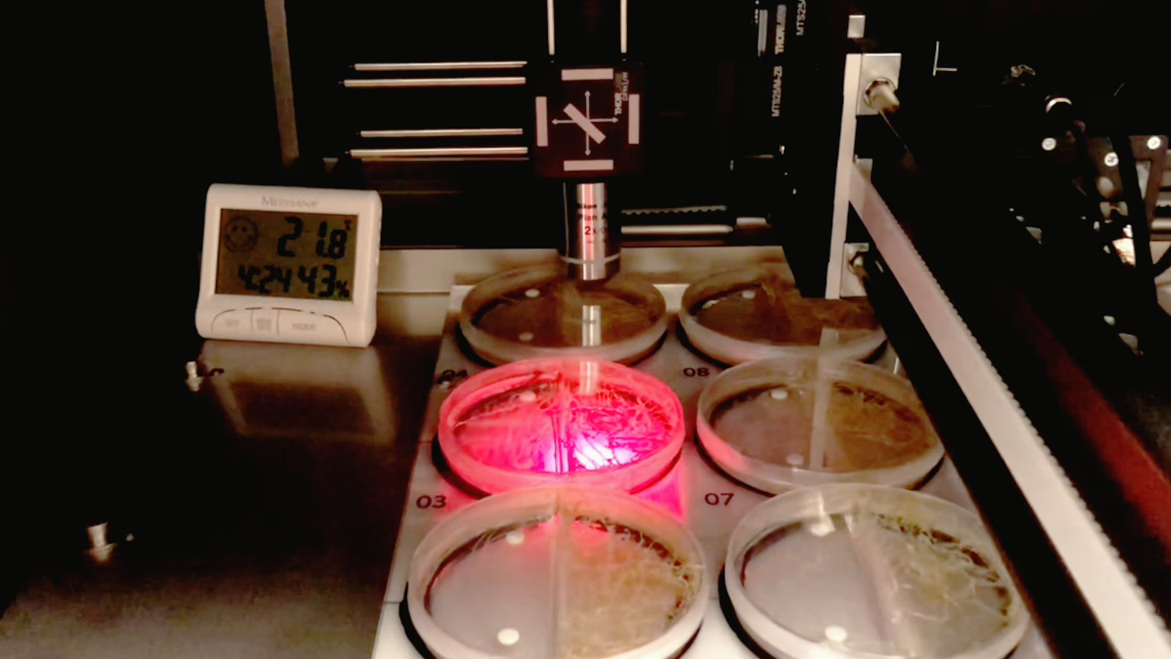
The AMOLF research team, led by Tom Shimizu, calibrated the models developed by the SPUN team with robotic imaging of over 300,000 living fungal hyphae. Hyphae are tiny thread-like structures that form underground fungal networks. Using these datasets, the researchers estimate that the fungal networks stretch for about 110 quadrillion kilometers in total.
Tom adds to this saying: “We estimate that the fungal networks contain around 300 million tons of carbon. That is roughly four to six times the combined mass of all people on earth.”
How to measure the width of mycelium?
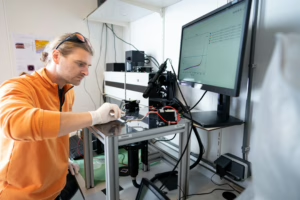
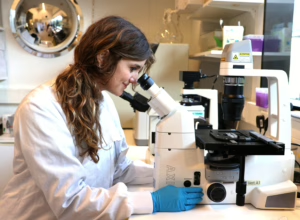
“With the emergence of new technologies in high-resolution imaging, machine-learning and robotics, we are starting to reveal what has long been hidden under our feet”, says co-lead author, Corentin Bisot, an AMOLF biophysicist. “We are learning how the complex bodies of network-forming fungi transport nutrients and help regulate the climate.” To convert the field data about the length of fungal networks into biomass estimates, Corentin used an imaging robot – designed and built at AMOLF – and acquired thousands of fungal network images in the lab. He then developed a machine-learning model to efficiently extract the radius of each hyphal tube within those imaged networks.
“It’s exciting to be able to connect the robotic imaging technologies we’re developing in the lab to these real-world investigations on a planetary scale”, says Tom. “There is a lot we can learn from combining our lab-based mechanistic studies with these extensive field-based surveys at which SPUN excels.”
Key findings
The study published in Science is a critical step towards understanding how carbon and nutrient flows unfold on a global scale. The researchers also identify potential threats. Mycorrhizal densities across croplands are predicted to be roughly half those in wild ecosystems. Wild grassland ecosystems were found to contain around 40% of the world’s mycorrhizal biomass. Yet grasslands are among earth’s least protected ecosystem and are being transformed into farmlands four times faster than forests. This reinforces a finding published by SPUN researchers last year, showing that 95% of the biodiversity hotspots for mycorrhizal fungi are located outside protected areas.
Learn more
- Read last year’s news about mycorrhizal fungi published in Nature.
- Watch video about the first global maps of the underground networks formed by mycorrhizal fungi
- Read The New York Times science feature:
- If you have questions about this research, please contact group leader Tom Shimizu at t.shimizu@amolf.nl
- Read full Science paper