Every gram of healthy soil contains many meters of mycelial threads that make up a vast underground network of symbiotic (mycorrhizal) fungi, which engage in nutrient trade with plants. The fungi forage for soil nutrients such as phosphorus, and provide them to plant roots in exchange for photosynthetic carbon compounds like sugars and fats. These partnerships drive massive transfer of atmospheric CO2-derived carbon from plants into the soil each year – a process that is fundamental to global ecosystem productivity and regulation of earth’s climate – but the basic rules for this exchange, and the underlying mechanisms, have remained a mystery.
AMOLF’s imaging robots
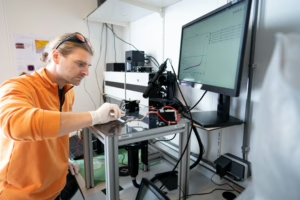
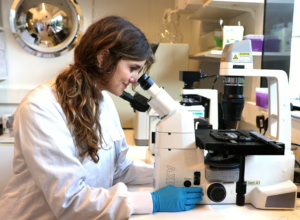
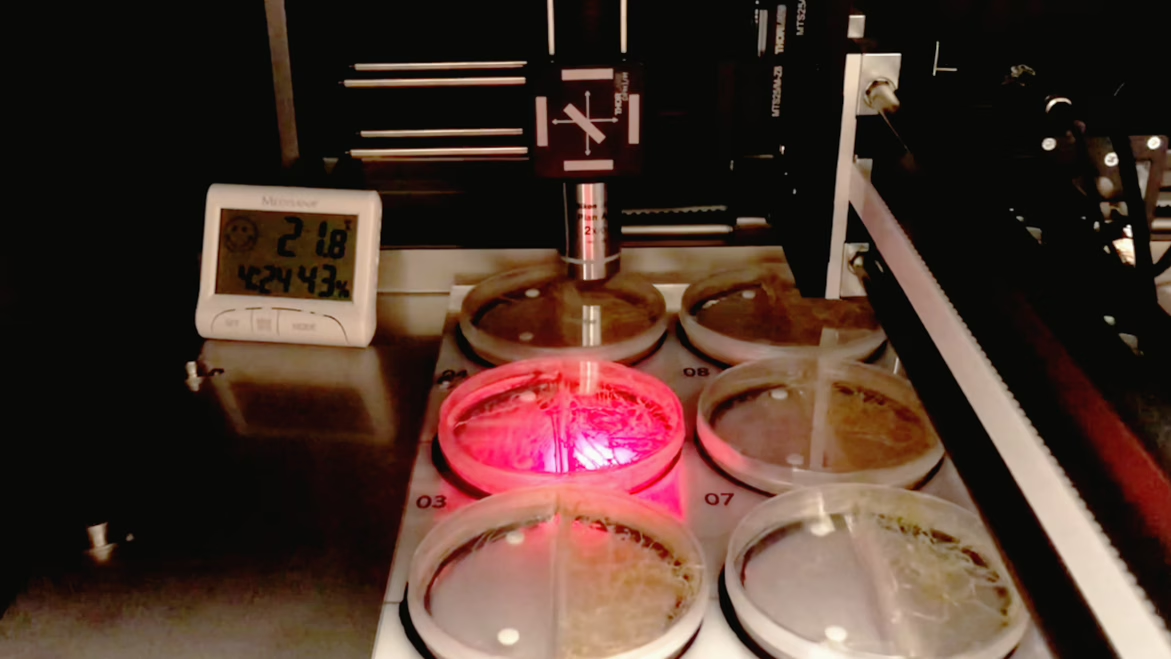
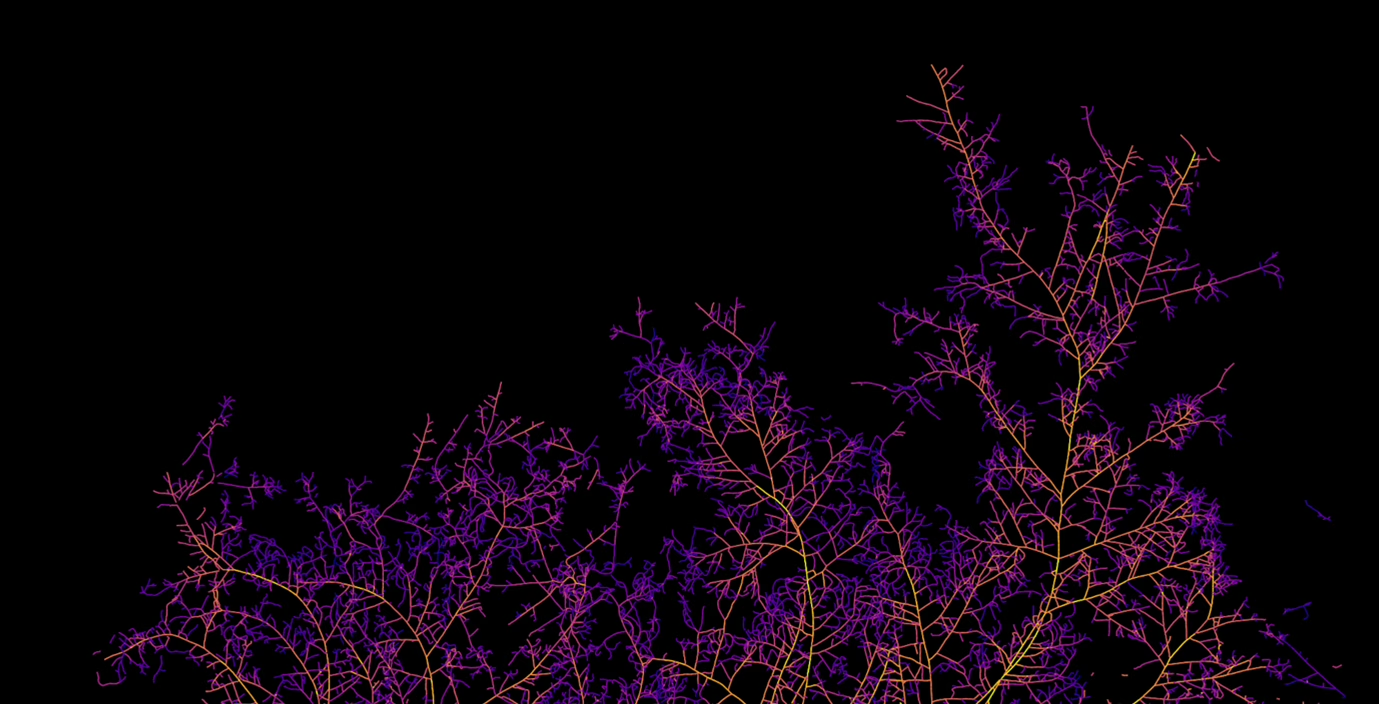
In the new study, Corentin Bisot (now at the European Molecular Biology Laboratory, EMBL) and his AMOLF colleagues developed a method to track resource exchange in real time during symbiotic growth. The team developed an automated machine-learning pipeline for analyzing large volumes of data, generated by specialized imaging robots designed and built by researchers and technicians at AMOLF. Corentin is enthusiastic about the result: “The robots allowed me to precisely resolve the size and shape of every nutrient-carrying tube (hyphal filament) making up the fungal network as it grows, enabling detailed estimates of carbon and phosphorus flows.”
Measuring exchange rate across time
The data revealed an intriguing pattern. Although networks of different fungal types varied widely in how they grow and forage for phosphorus, they all received the same amount of carbon for each unit of phosphorus delivered to the plant, specifically about 3g of carbon for every 1g of phosphorus. This suggests that the symbiotic give-and-take (what scientists call ‘reciprocal exchange’) of nutrients is a tightly regulated process. Interestingly, however, the observed exchange rate shifted to a different carbon/phosphorus ratio (from about 3:1 to about 4:1) for all fungal types tested when the plant partner was swapped with a different type – potentially indicating control by the plant.
Previous studies that sought to characterize this nutrient exchange depended on labeling nutrients with radioactivity – a procedure that was both laborious and limited to quantification at only one point in time. The new approach based on robotic imaging and machine learning, is powerful because it enables exchange-rate quantification throughout the growth period of the fungal network.
Rules of the game
AMOLF group leader Tom Shimizu is excited to further illuminate this intricate symbiotic relationship. He says: “The method provides a new basis for understanding and predicting how the nutrient exchange takes place in various situations, such as different plant-fungus combinations, or varying availability of nutrients. Defining these ‘rules of the game’ also opens a window into the control mechanisms governing this symbiosis that has been evolving over 400 million years.”
Learn more
- Read full paper here
- This paper was published in PNAS on February 6th, 2026: Carbon–phosphorus exchange rate constrains density–speed trade-off in arbuscular mycorrhizal fungal growth.
- If you have questions about this research, please contact Tom Shimizu via e-mail.
Image credits
- Imaging robot ‘Prince’ at AMOLF
- Snapshot of the fungal network architecture – Corentin Bisot (AMOLF / Vrije Universiteit Amsterdam)