Two Veni grants awarded for projects on immune system activation and twisted perovskites
Two researchers have been awarded Veni grants from the Dutch Research Council (NWO) for three-year postdoctoral research projects at AMOLF. Dr. Megan Farrell will conduct her project on how immune cells respond to signals from the tissue around them. Dr. Kunal Datta will investigate how new optical and electronic properties emerge when semiconductor crystals twist against each other.
The immune system’s brakes
Dr. Megan Farrell has been awarded a Veni grant for her project titled, ‘The Brakes of Immunity: Spatial Regulation of Immune Activation by Inhibitory Receptors.’ She will explore how immune cells sense and respond to their surroundings.
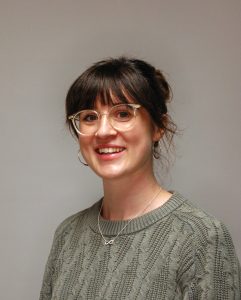
Certain immune molecules called ‘inhibitory receptors’ act as the immune system’s brakes, helping to keep immune responses under control and prevent damage to healthy tissues. Very little is currently known about how this happens. Using cutting-edge microscopy and nanotechnology, Megan will uncover how inhibitory receptors receive and interpret signals in their environment.
In collaboration with researchers from the Inhibitory Receptor lab at UMC Utrecht, Megan’s project will reveal how these environmental interactions can shape immune responses, protecting against autoimmune and inflammatory diseases and helping us understand how immune cell reactions change in the significantly different environment in tumors. “Understanding the balance between immune activation and inhibition will influence how we think about immune cells in unhealthy tissues, including cancerous and inflamed environments,” says Megan.
Megan is a postdoctoral researcher in the Physics of Cellular Interactions group at AMOLF, led by Dr. Kristina Ganzinger, and is also a researcher at the Oncode Institute.
Light with a twist
Dr. Kunal Datta has been awarded a Veni grant for his project titled ‘TwiLight: Twisted Crystals for Tunable Light Emission,’ where he will study twisted halide perovskite semiconductors to control nanoscale optical and electronic behavior.

When two periodic patterns are overlaid on top of each other with a small spatial offset, they form completely new so-called Moiré patterns. This, for example, is why we often see strange wave-like shapes in photographs when people are wearing something with fine, repetitive lines or dots.
The same effect occurs when stacking two ultrathin, two-dimensional, electronic materials and twisting them against each other. However, here, the Moiré pattern reconfigures the energetic landscape, forming local domains whose geometry can be used to control electronic properties and light at the nanoscale. Studying how these patterns form can therefore lead to smarter and more efficient devices that can be integrated in photonic, communication and computing technologies.
“This research is at the interface of two rapidly growing and exciting fields: halide perovskites and twistronics,” says Kunal. “I find this opportunity to bridge the two fields, and the possibility of learning from both, very unique and inspiring.”
Kunal will conduct his research as part of the Hybrid Solar Cells group at AMOLF, led by Professor Bruno Ehrler.
More information
For more information about the Veni grant, please visit the NWO website.
