

First direct observation of protein recycling: a key process for healthy cells
AMOLF researchers report in Nature Communications that they followed in real time how the cellular protein recycling system selects and dismantles proteins. Using single molecule manipulation, they found that the protein recycling system acts as a motor that threads proteins through a central pore. They also discovered energy-driven fluctuations that may help it recognize the correct target, revealing how cells avoid mistakes and prevent diseases such as Alzheimer’s.
Why cells recycle proteins
Cells in our body must constantly dismantle proteins to stay healthy. For instance, cancer can develop when the proteins that copy our DNA are not removed from the DNA after completing their task. And proteins can also cause Alzheimer’s when they become damaged and form clumps in our brains.
To prevent this, cells use specialized molecular machines (called Cdc48 or p97) that disassemble these no-longer-wanted proteins. These proteins can then either perform their function again when needed or be broken down into amino acids from which new proteins can be synthesized. In this way, proteins are continuously recycled.
Watching the molecular machine in motion
The AMOLF team captured how this recycling system operates step by step at the single molecule level. Although scientists already knew that the molecular machine uses energy, it was unclear how it selects and processes its targets.
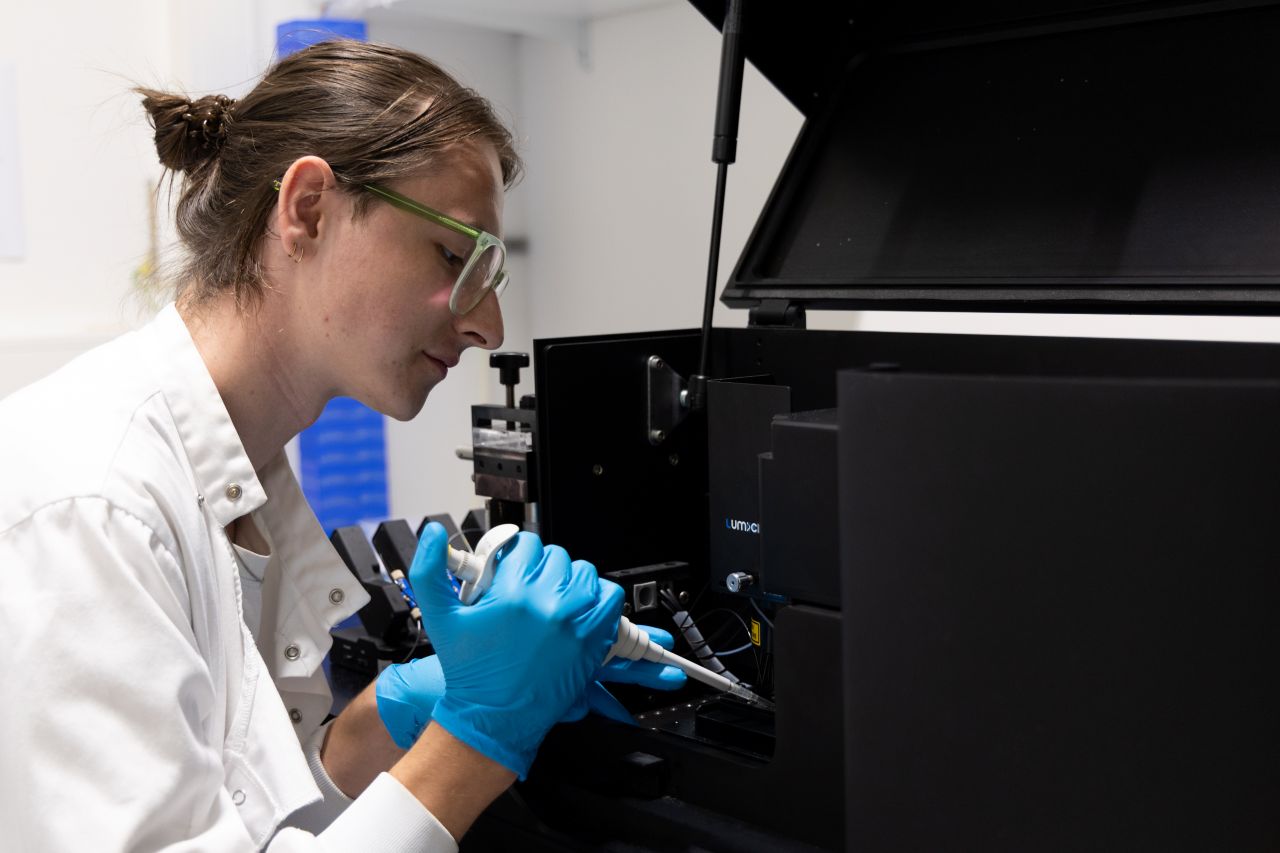
“We were able to follow this important process for the first time,” says AMOLF group leader Professor Sander Tans. “By monitoring a single protein with optical tweezers, we could see the pulling motion itself. “
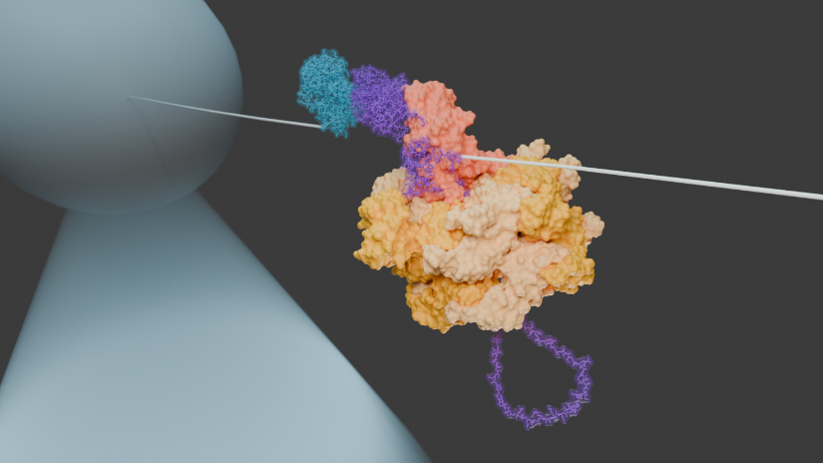
The researchers found that the doughnut-shaped protein recycling system works like a nanoscale machine. Powered by ATP (the cell’s energy currency), it grips part of a folded protein and actively threads its amino acid chain through a narrow central opening, thereby pulling the protein apart and unfolding it.
How to select a target?
The team also saw that right before the pulling activity, the molecular machine fires off a burst of energy. These bursts are separate from the pulling activity and may help the machine determine whether the encountered protein is the correct target.
This selectivity is essential. Cells contain thousands of proteins, many of them vital for survival. Destroying the wrong one could disrupt critical biological processes. Proteins are known to be labeled by marker proteins called ubiquitins. These labels function like a QR code, enabling the system to target the proteins that need to be recycled. The researchers were able to get an insight into how the scanning process works.
“Our results suggest the machine does not simply grab the ubiquitin marked protein and starts transporting it,” says Sander. “There seems to be a preparatory burst first, which suggests it helps to target the correct substrate.”
Together, these observations suggest that protein selection is not only based on protein-protein recognition signals, but also on movements within the molecular machine itself. This adds a new layer to how scientists understand cellular quality control, where timing and motion appear to be as important as chemical recognition.
Relevance for disease research
Defects in protein disposal systems are associated with diseases such as Alzheimer’s, Parkinson’s, and cancer. Better understanding these pathways may eventually help researchers design therapies that enhance removal of toxic proteins or block degradation processes exploited by diseased cells.
By revealing both the motor mechanism and a likely recognition step, the research opens new directions to study the molecular dynamic basis of protein recycling.
Learn more
- If you have any questions about this research, contact Sander Tans at s.tans@amolf.nl
- The paper ‘Direct observation of ATP-driven ubiquitin chain handling by Cdc48’ is published in Nature Communications.
- Read full paper on nature.com
