

A smart new way to study mobile ions in perovskite solar cells
Researchers in the Hybrid Solar Cells group have developed a simple new method to study mobile ions in perovskite solar cells. These ions play a key role in the degradation of the cells, so understanding them is essential to make more stable solar devices.
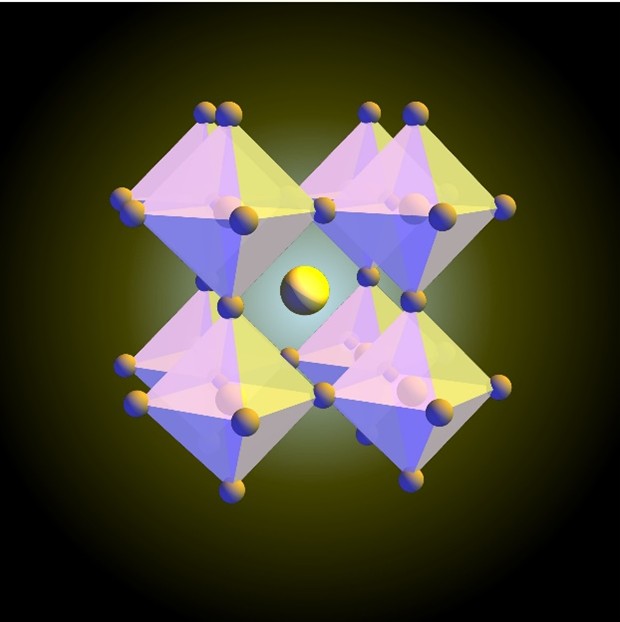
Until now, studying mobile ions has been quite difficult. But in a new paper in ACS Energy Letters, first author Moritz Schmidt introduces an intuitive way to do this. The method works a bit like freezing and melting water. When water freezes, it stops flowing. In the same way, when we cool down a solar cell, the mobile ions stop moving.
“Before freezing, we push all the ions to one side of the cell”, says Moritz. “When the device warms up again, the ions start to flow, just like water melting from an ice cube. Because they are charged, their movement creates an electrical current that we can measure.” This approach reveals how many ions are present and how strongly they are bound in the material.
According to Bruno Ehrler, head of the Hybrid Solar Cells group, “The findings will enable many more researchers to study and quantify mobile ions. We expect that this will accelerate the improvements in the stability of perovskite solar cells.”
Learn more
If you have questions about this research, please contact Moritz Schmidt (m.schmidt@amolf.nl) or Bruno Ehrler (b.ehrler@amolf.nl).
On December 12 this paper was published online in ACS Energy Letters: “Quantification of mobile ions in perovskite solar cells with thermally activated ion current measurements.”
