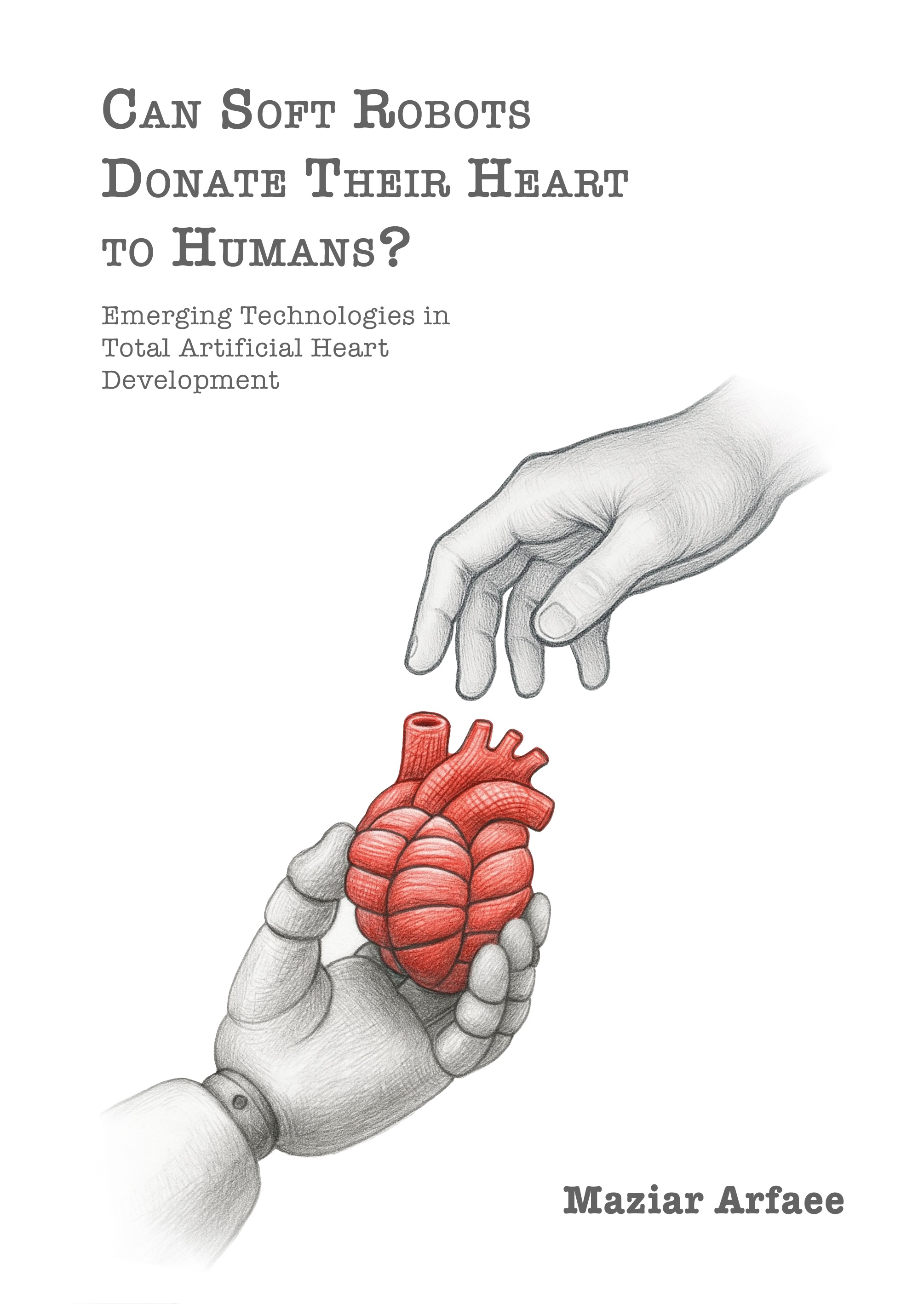

Can Soft Robots Donate Their Heart to Humans? Emerging Technologies in Total Artificial Heart Development
This thesis explores the potential of soft robotics to revolutionize the development of total artificial hearts (TAHs) for patients with end-stage heart failure. Despite major advances, conventional mechanical circulatory support systems—including ventricular assist devices (VADs) and current-generation TAHs—remain constrained by complications such as thrombosis, infection, mechanical wear, and limited physiological adaptability. Their reliance on rigid components and percutaneous driveline systems compromises both durability and patient quality of life.
By drawing inspiration from the compliant and adaptive properties of biological tissues, soft robotic systems offer a new paradigm for artificial heart design—one that emphasizes mechanical compliance, physiological flow generation, and hemocompatibility. This work integrates material science, fluidic actuation, and biointerface engineering to develop two complementary soft robotic TAH concepts.
The first, the LIMO (Less In, More Out) heart, introduces a compact pumping mechanism that minimizes device size through an efficient soft fluidic transmission system, offering a pathway toward anatomically compatible and energy-efficient actuation. The second, the Hybrid Heart, combines soft pneumatic actuation with supramolecular polymer coatings to enhance blood compatibility and encourage biological integration.
Together, these developments demonstrate how soft robotics can overcome the limitations of rigid artificial hearts and advance toward fully implantable systems.
Through analytical modeling, prototyping, and biological validation, this thesis establishes foundational design strategies for the next generation of soft robotic artificial hearts—devices capable of achieving not only mechanical function but true physiological harmony with the human body.