People and recognition

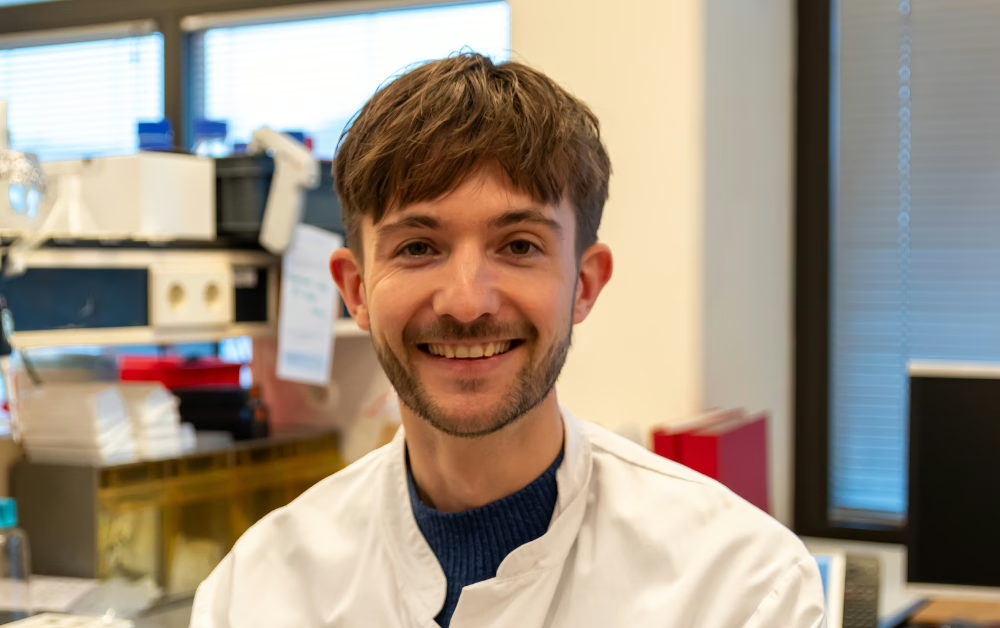
AMOLF PhD student Tom Aarts: Faces of Science representative

Today, the KNAW presented the new Faces of Science, and AMOLF researcher Tom Aarts (Physics of Cellular Interactions) is one of them. 

Tom is happy with this opportunity to share his science with people outside of academia. He says, “Immune cells are continuously on the watch for threats in the body. To determine if they should attack, they use a sort of antenna that picks up signals from its surroundings. This signal relay can be distorted in people with cancer or autoimmune diseases. I study this antenna because if we better understand how it works, we can potentially come up with new treatments.” 

In addition to the scientific content Tom also intends to explain how the academic process works and to describe the collaborations he has, which are essential to make discoveries. 

The Faces of Science give the general public an insight in research and the life of a scientist. They do so by writing blogs, making videos and presentations.  

Are you interested in the research group that Tom is part of? Then have a look at the website page of the group Physics of Cellular Interactions.
Share article
What's happening

Most recent news items

All news items
Joining forces to study perovskite interfaces
People and recognition

Joining forces to study perovskite interfaces

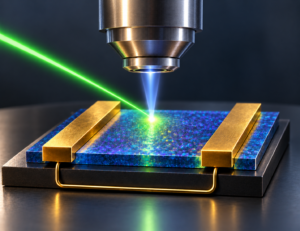
AMOLF group leaders Professor Wiebke Albrecht and Professor Bruno Ehrler have received an NWO ENW-M2 grant for their joint research project, The Dynamic Atomic Interface between Halide Perovskites and Metals. The insights gained will pave the way for sustainable, high-performance solar energy and information technology. Wiebke and Bruno will each hire a PhD student for this project. The grant amounts to €800.000.

Read news item
Wim Noorduin and Arian van Asten presenting their scientific journey
People and recognition

Wim Noorduin and Arian van Asten presenting their scientific journey

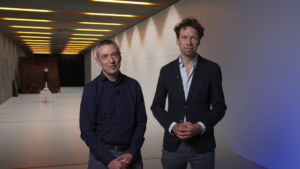
On October 8, Professor Wim Noorduin and his collaborator Professor Arian van Asten (University of Amsterdam) presented their scientific journey in a video to the audience at the ‘Avond van Wetenschap en Maatschappij’. They did so alongside the other nominees for the Huibregtsen Prize.

Read news item
Natural phenomena ‘hyperuniform disorder’ enables highly efficient, thin silicon solar cells
Research highlights

Natural phenomena ‘hyperuniform disorder’ enables highly efficient, thin silicon solar cells

Silicon solar panels are rigid and heavy, and many rooftops cannot support them. This creates a need for thin, flexible solar cells that can be integrated into building materials. However, making silicon solar cells thinner makes it harder to trap light inside the material. Researchers in the 3D Photovoltaics group found a fascinating way to overcome this challenge using a phenomenon called hyperuniform disorder. They publish their findings in the journal ACS Photonics.

The researchers were able to make highly efficient silicon solar cell materials that are 30 times thinner than conventional ones. They managed to do this by integrating a layer of nanometer sized structures on top of the material. Up close, this pattern looks random, but it is remarkably when you step back: no clumps, no gaps, and no repeating pattern. This is called hyperuniform disorder (or HUD).

Read news item
Off Road grant for a better understanding of intestinal cells that communicate with the immune system
People and recognition

Off Road grant for a better understanding of intestinal cells that communicate with the immune system

AMOLF postdoc Dr. Susanna Eli received an Off Road grant from ZonMw to investigate cells known as M cells in the gut lining that connect the intestine to the immune system. Understanding how M cells develop could ultimately contribute to better treatments for intestinal and immune-related diseases. The grant amounts to 100,000 euros.

Read news item
Stay informed

Get the latest research highlights, events, and news from our institute delivered to your inbox