
Internship: Imaging the activity of plasmonic electrocatalysts
Work Activities
Plasmonic nanoparticles exhibit diverse effects under light exposure, such as enhancing electric fields and forming short-lived charged species, with applications in nanomedicine and photocatalysis. Here, you will investigate plasmonic nanoparticles for next-generation electrocatalytic reactors by using scanning electrochemical microscopy. This technique is a new type of scanning probe microscopy that can help understand the working mechanism in plasmonic chemistry.
Qualifications
We can only offer the project if:
-
you are currently enrolled in a Master’s program in physics, chemistry, materials science, or a related field
and
-
you have an EU member state nationality
or
- you don't hold an EU nationality, but you are enrolled at a university in the Netherlands.
The internship has to be a mandatory part of your curriculum, for instance, as a MSc thesis.
We expect you to be available for at least 5 months, although longer is preferable.
Work environment
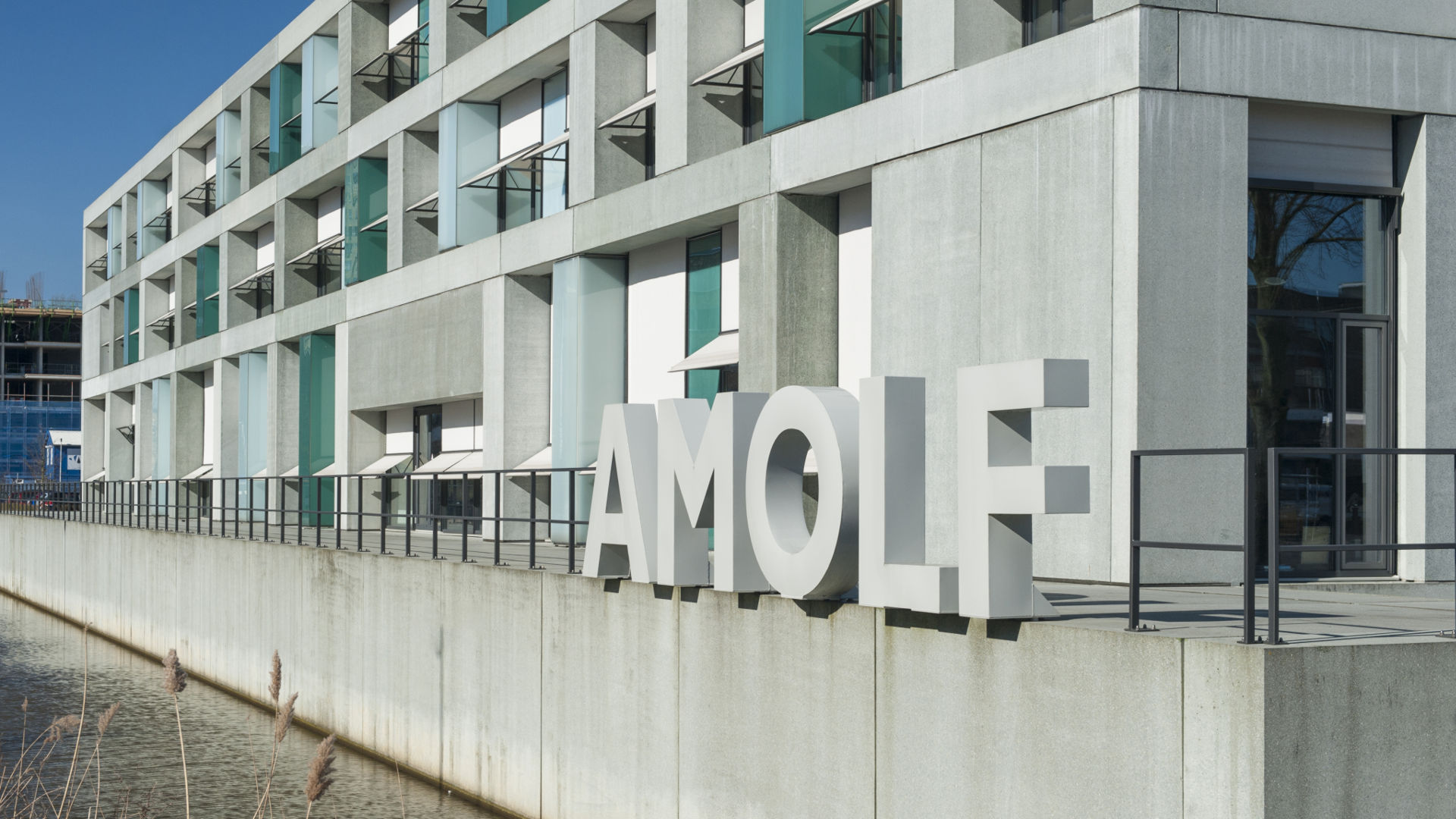
AMOLF is a part of NWO-I and initiate and performs leading fundamental research on the physics of complex forms of matter, and to create new functional materials, in partnership with academia and industry. The institute is located at Amsterdam Science Park and currently employs about 140 researchers and 80 support employees. www.amolf.nl
The 3D Photovoltaics Group focuses on the investigation of nanoscale phenomena at (electrified) solid-liquid interfaces and the development of new materials and energy conversion principles for sustainable energy generation.
Current photovoltaic technologies require the use of highly pure materials, where the purification process is very energy intensive. In the group, we investigate how the same conversion efficiency can be obtained with lower quality material by introducing nanophotonic concepts and rational light management strategies. We develop new fabrication pathways for photovoltaic absorber and contact layers within the framework of circular chemistry, that minimize raw material usage and less energy-intensive systems. In parallel, we are interested in the (in)direct storage of solar energy. In particular, we focus on underpinning the key physico-chemical properties of solid-liquid interfaces that rule charge transfer and conversion from electrical to chemical energy. For this, we develop in-situ characterisation techniques with which electrochemical, optical and surface properties of materials can be determined with nanoscale resolution.
Working conditions
At the start of the traineeship your trainee plan will be set out, in consultation with your AMOLF supervisor.
AMOLF Energy Research Academy: AMOLF offers a special program for research internships in sustainable energy science. It is composed of a research project in one of AMOLF’s research groups, combined with a series of dedicated tutorials on fundamental aspects of the science behind sustainability technology. Admission to this Academy is only possible in combination with a research internship project at AMOLF.
More information?
For further information about the position, please contact prof. dr. Esther Alarcón Lladó or dr. Tom Veeken .
Application
You can respond to this vacancy online via the button below. Please annex your:
- Motivation letter;
- Resume;
- List of followed courses plus grades.
Online screening may be part of the selection.
Diversity code
AMOLF is highly committed to an inclusive and diverse work environment: we want to develop talent and creativity by bringing together people from different backgrounds and cultures. We recruit and select on the basis of competencies and talents. We strongly encourage anyone with the right qualifications to apply for the vacancy, regardless of age, gender, origin, sexual orientation or physical ability.
AMOLF has won the NNV Diversity Award 2022, which is awarded every two years by the Netherlands Physical Society for demonstrating the most successful implementation of equality, diversity and inclusion (EDI).
Commercial activities in response to this ad are not appreciated.
