Sustainable Energy Materials Symposium – Speakers
Registration deadline: June 12, 2026, 23:59
Prof. dr. Pascal Buskens (TNO and Hasselt University)
Title: From plasmonic catalysts to pilot scale process demonstrators for photothermal CO2 conversion – what is technically and economically feasible?
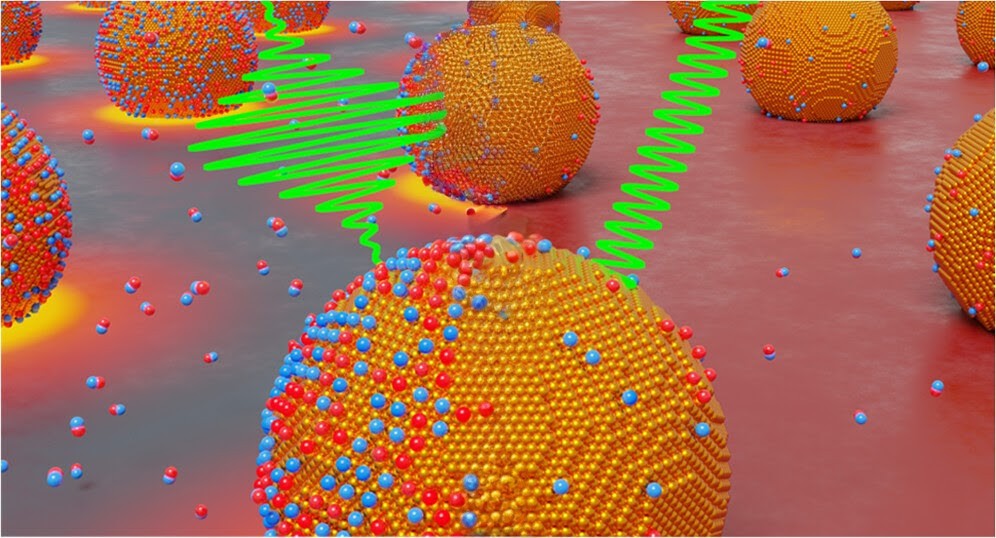
Abstract: Photothermal catalysis is a promising strategy for powering chemical processes with sunlight. Photothermal catalysts typically comprise plasmonic nanoparticles deposited on dielectric or semiconductive support materials. The localized surface plasmon resonance can influence chemical reactions by: (i) local heat generation (Joule effect), allowing for enhanced reaction kinetics, (ii) near-field enhancement which can strongly benefit photo-activated processes or generate additional charge carriers in the semiconductor and (iii) promoting an electron to a higher energy level, referred to as a hot electron. In case of semiconductive supports, hot electrons can be injected into the conduction band over the Schottky barrier, increasing the charge carrier lifetime and thus their probability of participating in a reaction. Conventional generation of electron–hole pairs in the semiconductor by UV excitation also contributes. The local heat generation is defined as thermal contribution, while the near-field enhancement, hot electron generation and injection and bandgap transition combined are referred to as non-thermal contributors.
Here, we present the design, synthesis, characterization, and performance validation of plasmonic catalysts for sunlight-powered conversion of CO2 to CO and CH4, and the results obtained from targeted studies to distinguish between thermal and non-thermal contributions. This is of importance both for fundamental understanding and rational process development. Furthermore, we present insights in additional components required to develop photothermal processes such as solar concentrators, transparent flow reactors, sensors, and artificial light sources, and present first results of an outdoor process demonstrator accompanied by an economic feasibility study.
Prof. dr. Peter Zijlstra (TU Eindhoven)
Title: Monitoring plasmon-enhanced processes at the single-molecule level

Abstract: Recent advances in plasmonic nanomaterials offer new opportunities for controlling surface chemistry with unprecedented spatial and temporal resolution. Such materials find applications in catalysis, and are promising platforms in single-molecule biosensing. In the first part of this talk, I will discuss how metallic nanoparticles can be chemically functionalized and how their surface reactivity can be manipulated using plasmon‑enhanced processes. Combining wavelength and power dependent studies with single-particle nanothermometry demonstrates that hot charge carriers can drive location-dependent bond cleavage at the nanoparticle interface. This capability opens up new opportunities to regenerate plasmonic surfaces and control the spatial distribution of surface-bound molecules.
In the second part, I will show how these plasmonic platforms can be leveraged to monitor biochemical interactions at the single‑molecule level. By coupling fluorescence readout schemes with the strong near-field enhancements of metallic nanoparticles, we can resolve binding, unbinding, and conformational events with extreme sensitivity. This approach enables real‑time quantification of molecular kinetics on plasmonic surfaces on ultrashort (microsecond) timescales and at the single-molecule level. I will finally demonstrate the application of these platforms toward multiplexed and continuous single-molecule biosensing with future applications in healthcare and environmental monitoring.
Dr. Andrea Pickel (University of Texas, Austin)
Title: Probing Thermal Contributions to Plasmonic Photocatalysis with Dual-Mode Operando Thermometry and Reaction Monitoring
Abstract: Many experimental demonstrations have shown that chemical reactions can be strongly enhanced when the reactions are performed on the surfaces of plasmonic nanostructures, a phenomenon known as plasmonic photocatalysis. However, the relative contribution of hot electron versus thermal effects to the observed enhancement remains sharply contested. Isolating the role of local laser heating of the plasmonic nanostructure surface remains especially challenging. Operando thermometry techniques can thus play a critical role in elucidating the physical mechanisms behind plasmonic photocatalysis if high-fidelity thermometers that provide the requisite chemical inertness, thermal stability, and spatial resolution can be identified.
We have developed a dual-mode approach that leverages temperature-dependent upconverting nanoparticle (UCNP) luminescence and Raman spectroscopy for microscale operando thermometry and chemical reaction monitoring, respectively. We achieve separation of the UCNP and Raman signals in the spectral domain, enabling spatially and temporally correlated yet distinct measurements of the surface temperature and reaction progress. Using this method, we analyze the photocatalyzed dimerization of 4-nitrothiophenol (4-NTP) to 4,4’-dimercaptoazobenzene (DMAB) as a model plasmonic reaction. In an initial study, we recorded temperature rises exceeding 40 K during 4-NTP dimerization on silver-coated silicon nanopillar structures, yet complementary measurements rule out a purely thermal mechanism. However, we also find that external heating can further enhance the reaction once a threshold laser intensity is applied. In a subsequent study, we gain deeper insights by fabricating silver plasmonic nanostructures on several optically transparent substrates whose thermal conductivities span orders of magnitude. We determine that laser heating plays a dominant role; simultaneously, we again show that heating alone cannot catalyze the reaction. Using an ultrahigh thermal conductivity diamond substrate, we decouple laser heating from non-thermal laser intensity effects and demonstrate that, once a sufficiently high laser intensity is applied, any additional enhancement observed for certain samples upon further increasing the intensity is attributable solely to laser heating. These results highlight the unique insights that can be gleaned from our dual-mode operando spectroscopy and the complex interplay between thermal and non-thermal contributions to the observed reaction enhancement.
Prof. dr. Kallie Willets (Temple University, Philadelphia)

Title: Visualizing light-driven reactions on single plasmonic nanostructures
Abstract: Plasmonic nanoparticles are well-recognized for their ability to transform photon energy into other forms of energy, leading to spatially localized electromagnetic fields, increased temperatures, and hot charge carriers, all of which have been implicated in facilitating light-driven chemistry. However, many plasmonic nanoparticles are prepared via colloidal synthesis, which yields heterogeneity in the shape and size of the resulting nanostructures, as well as diversity in their surface chemistry due to the presence of shape-directing surfactants. The impact of this local heterogeneity on nanoparticle performance in reaction environments requires characterization tools capable of monitoring individual nanostructures under in situ and in operando reaction conditions. Optical microscopy provides this requisite compatibility, while allowing light to play a dual role as both driver and probe of reactions in real time. However, in order to monitor reactions at single nanoparticles, we require systems that produce sufficient signal-to-noise, which has typically limited studies on single plasmonic nanoparticles to strongly scattering metals, like silver and gold, and nanoparticle sizes >50 nm. This talk will discuss our recent work using wavelength-resolved interferometric scattering, in which we expand the composition and size of nanoparticles that can be measured by optical microscopy, and showcase mechanistically distinct reaction pathways for light-driven chemistry based on the excitation wavelength.